
A Table Big Enough for Everyone
Tiffany Chan
Strategist, Artist, Community Builder
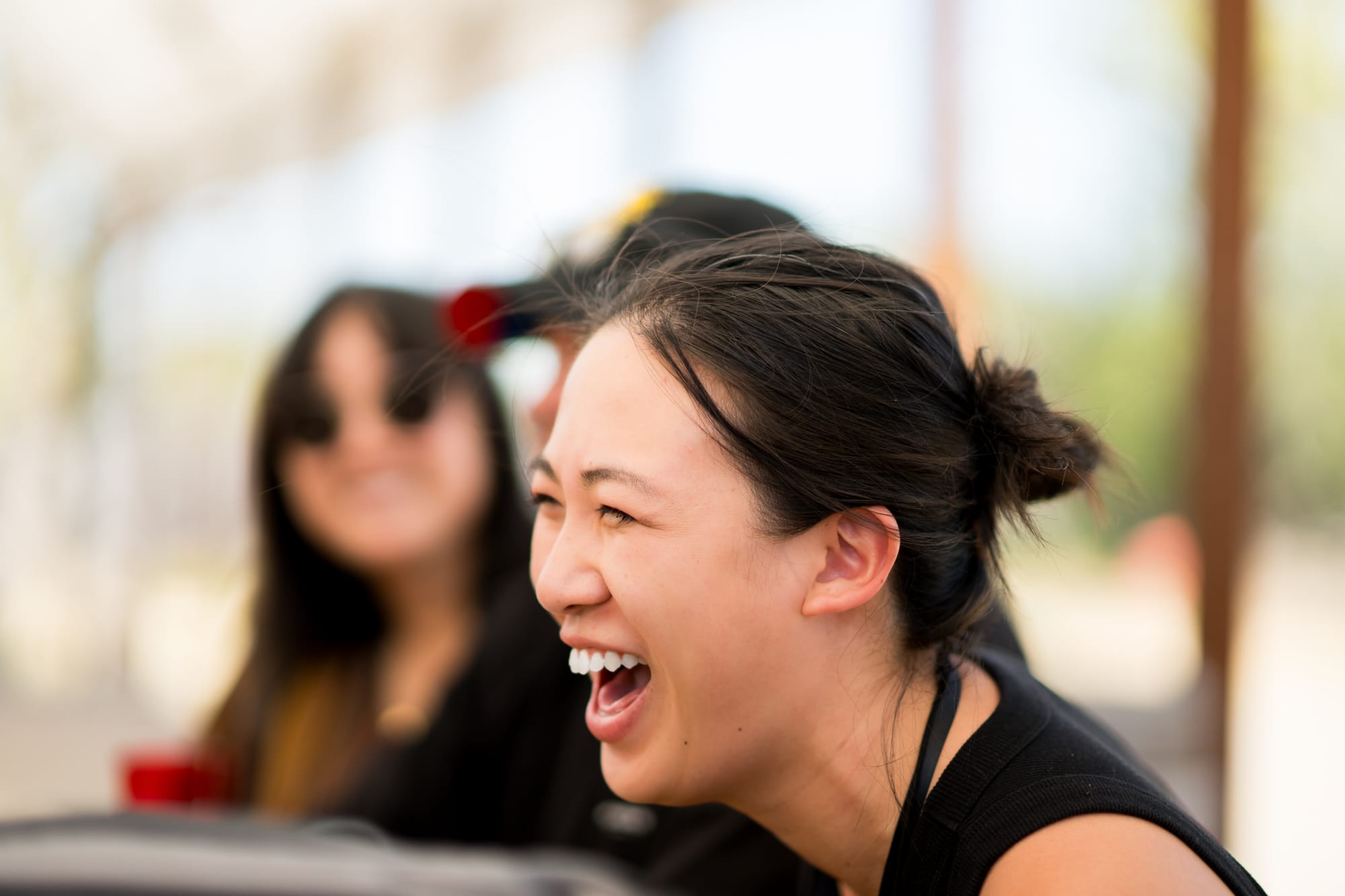
Tiffany didn't set out to build a creative ecosystem.
She set out with a question:
What grows when we create together?
It turns out that everything is interconnected.
...
She grew up a Texan and the eldest daughter of Hong Kong immigrants. Summers in Hong Kong were enough to hold on to her Cantonese and the culture. All while learning how to navigate the complexities and heat of Texas.
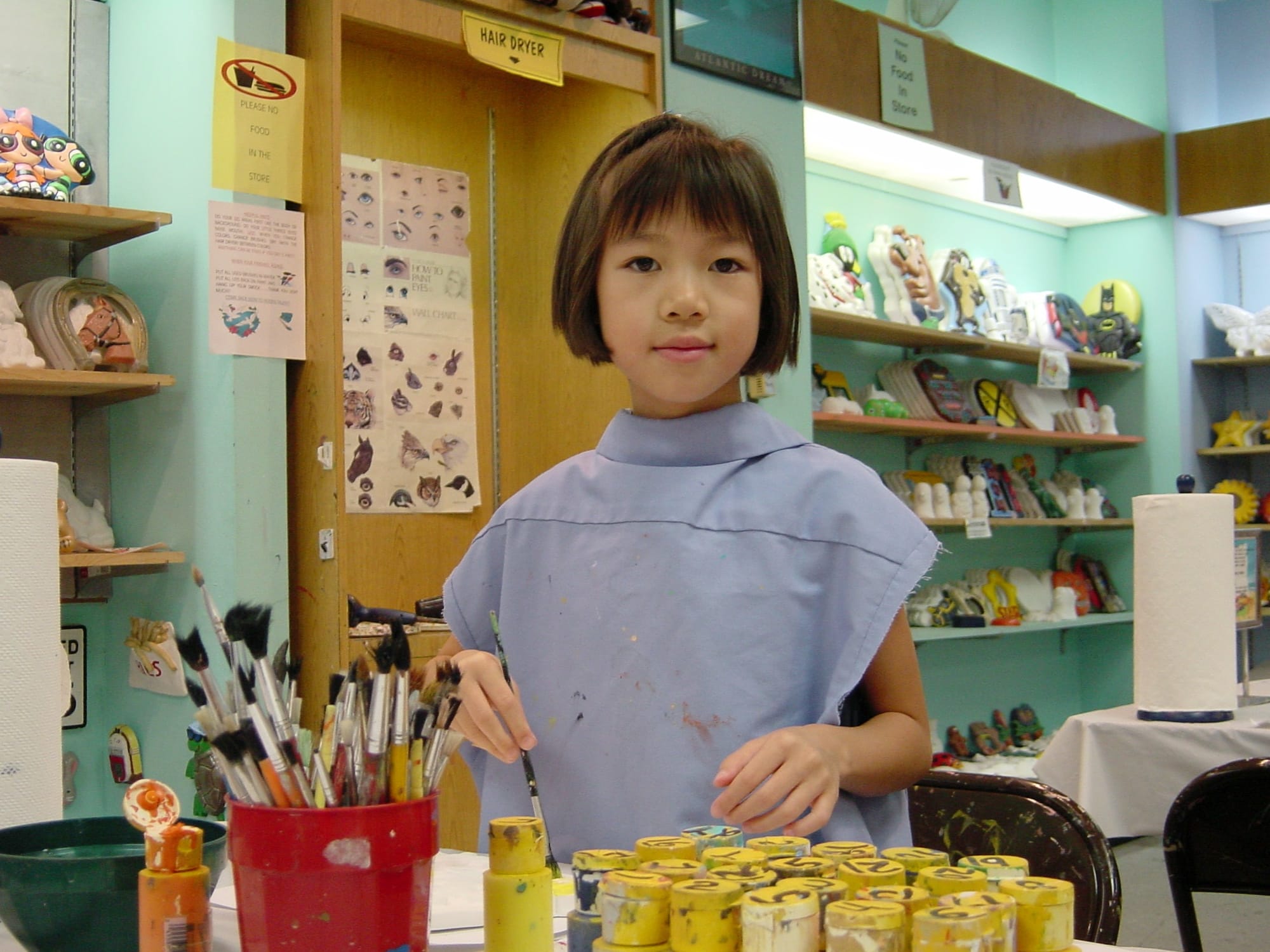
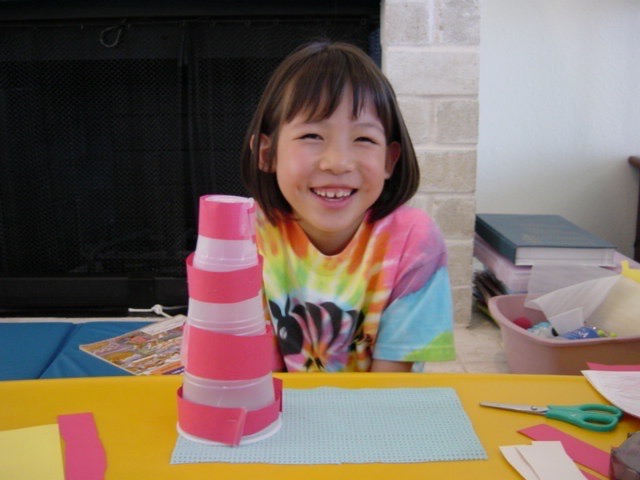
There was an art table at home. Not a desk or homework station. An art table — supplies always out, always available. No explanation required. Just: here, make something.
She didn't know it at the time, but that table was doing something specific. It was building a confidence that doesn't come from grades or trophies. The kind that comes from learning early on that you can bring something into the world that didn't exist before.
Tiffany believes everyone is a creative — not just those who make a living from it, the ones she calls Creatives (capital C). The difference between someone who makes things and someone who doesn't usually isn't talent. It's access. Space. Materials. Time. Mental capacity.
That belief — that creativity is a capacity, not a credential — is the foundation under everything she's built since.
...
From a young age, Tiffany’s parents kept the door open for her to follow her curiosity. She knows the pressures of achievement and external validation intimately. In wandering different paths, she came to know her luck as she grappled with the question:
Why does society value different contributions so differently — when all of them are essential for the world to function?
The scientist and the artist. The strategist and the craftsperson. None of these exist without the others.
She didn't have an easy answer. So she started building spaces where questions could be explored.
...
Tiffany began her journey at The University of Texas at Austin as a chemical engineering major with a genuine love for maths and sciences. But the call towards creativity became louder and louder until she found her way to Textiles and Apparel Design, finding kinship with those who celebrated ideas instead of competing over them. A room where the question was what if we did this? and the answer was always worth trying.
In the fall of 2014, she stepped in as Editor-in-Chief of Spark Magazine, rebuilding the organization from the ground up during a moment of reset and transition. A 200-page print publication, twice a year, with a team that grew from 40 to 200 students across campus. She wasn't just running a publication. She was proving something: creative community doesn't belong only to the people who call themselves Creative.
That was the first time she built something like this. It wouldn't be the last.
...
After college, she went to McKinsey & Company. On a joint project with IDEO, she found the intersection she thrives in today: where data-informed thinking meets people-first design.
When the pandemic hit, she chose to take on a project a New Jersey K-12 independent school. Two campuses. 1,200 students. 400 faculty. How do we school now?
She chose to stay in educational strategy, applying her honed business skills to improve systems in service of people.
Challenging leaders to dare to reimagine what’s possible. Coaching teams through change.
None of it felt linear. Turns out, all of it was preparation.
...
This time last year, all of this culminated in the founding of The Dandelion Society, her second LLC. It is intentionally structured as an ecosystem of brands that imagine new ways of being across the breadth of experiences that is the human journey.
Everything she's building sits within it.
Neighborly Strategies is her consulting practice. Systems-based strategic planning for creatives, nonprofits, and independent schools — the organizations that need this thinking most and often have the least access to it. Priced intentionally. She doesn't want to be a gatekeeper.
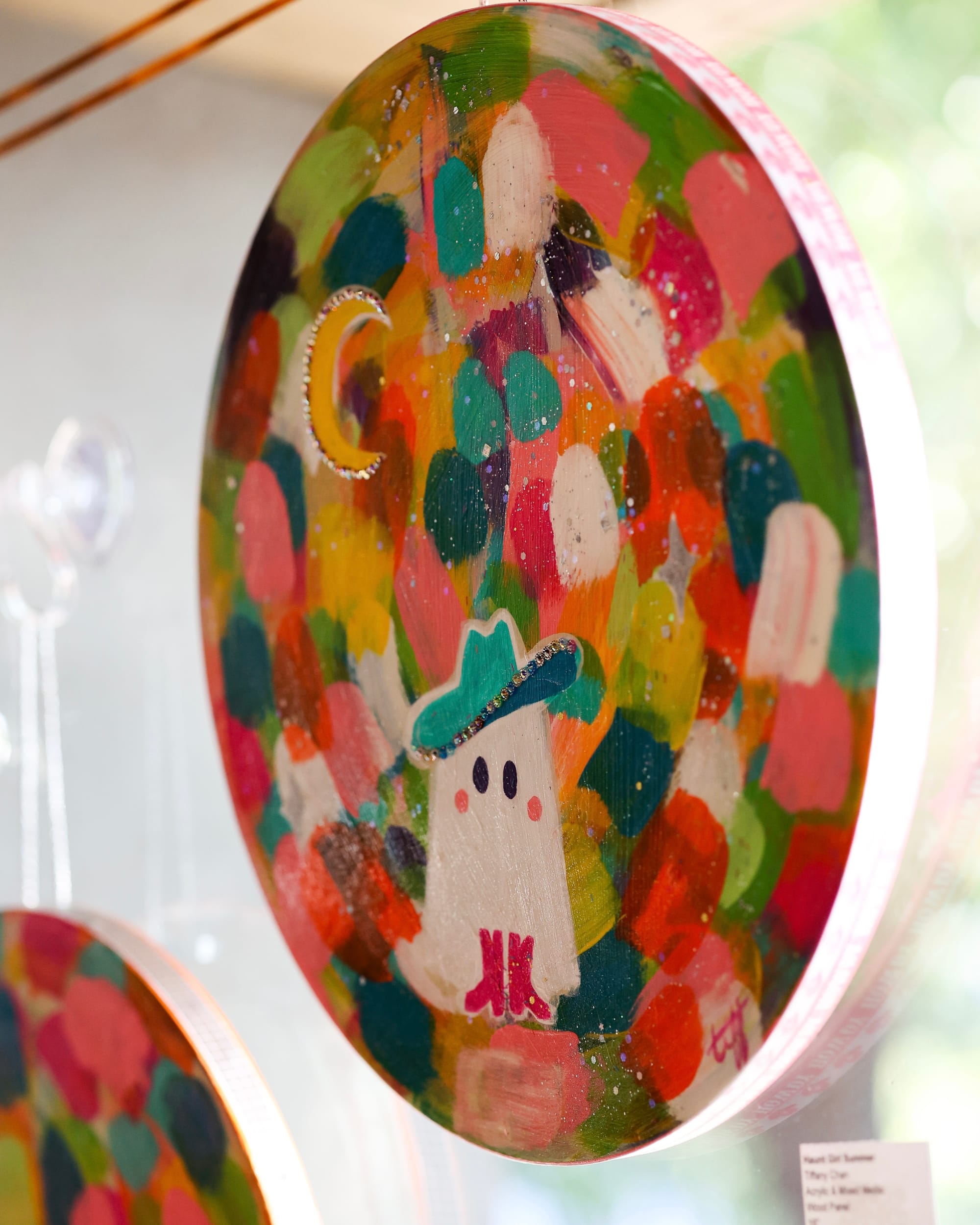
makingtiff is her artist identity. She often works in mixed media, with a foundation in large acrylic paintings. Tiffany now actively exploring collaborative community installations where the act of making is the point. Her piece at Lau Lau — a 25-foot hanging dragon, paper-machéd by approximately 30 people in a single craft night — wasn't just an object. Participants contributed affirmations and wishes. The piece became a record of the people who built it. That's the design intent: build something where the process produces the meaning, not just the outcome.
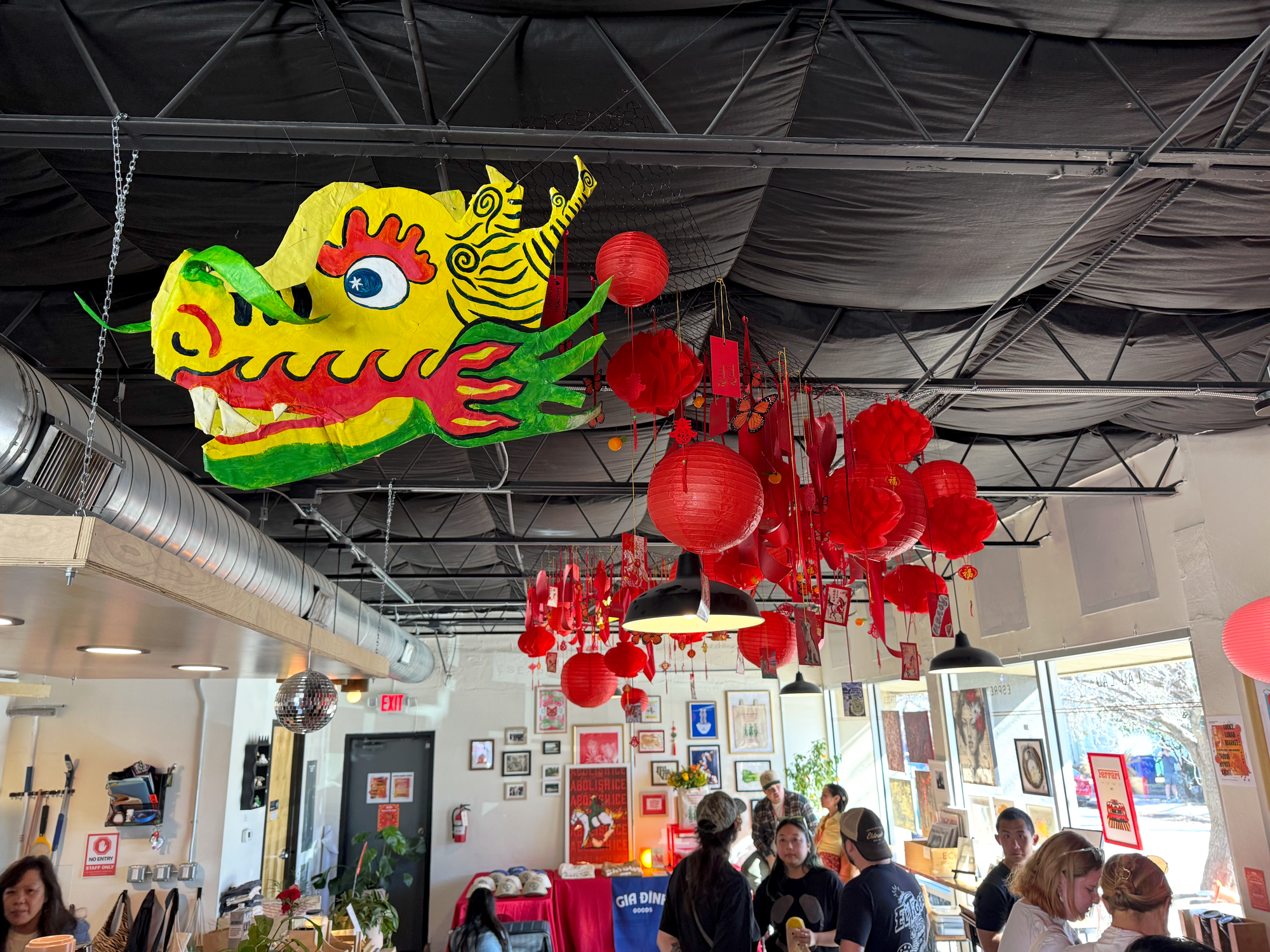
The Lucky Market Festival is the one she didn't see coming. It emerged through a Slipper Assembly conversation with Chelle Licci and, now with strong operational support from Jeannine Hightower, has grown to become one of the clearest expressions of how Tiffany thinks about community. It is the same thing she has always been doing, just bigger: lowering the barrier so more people can be part of what gets built.
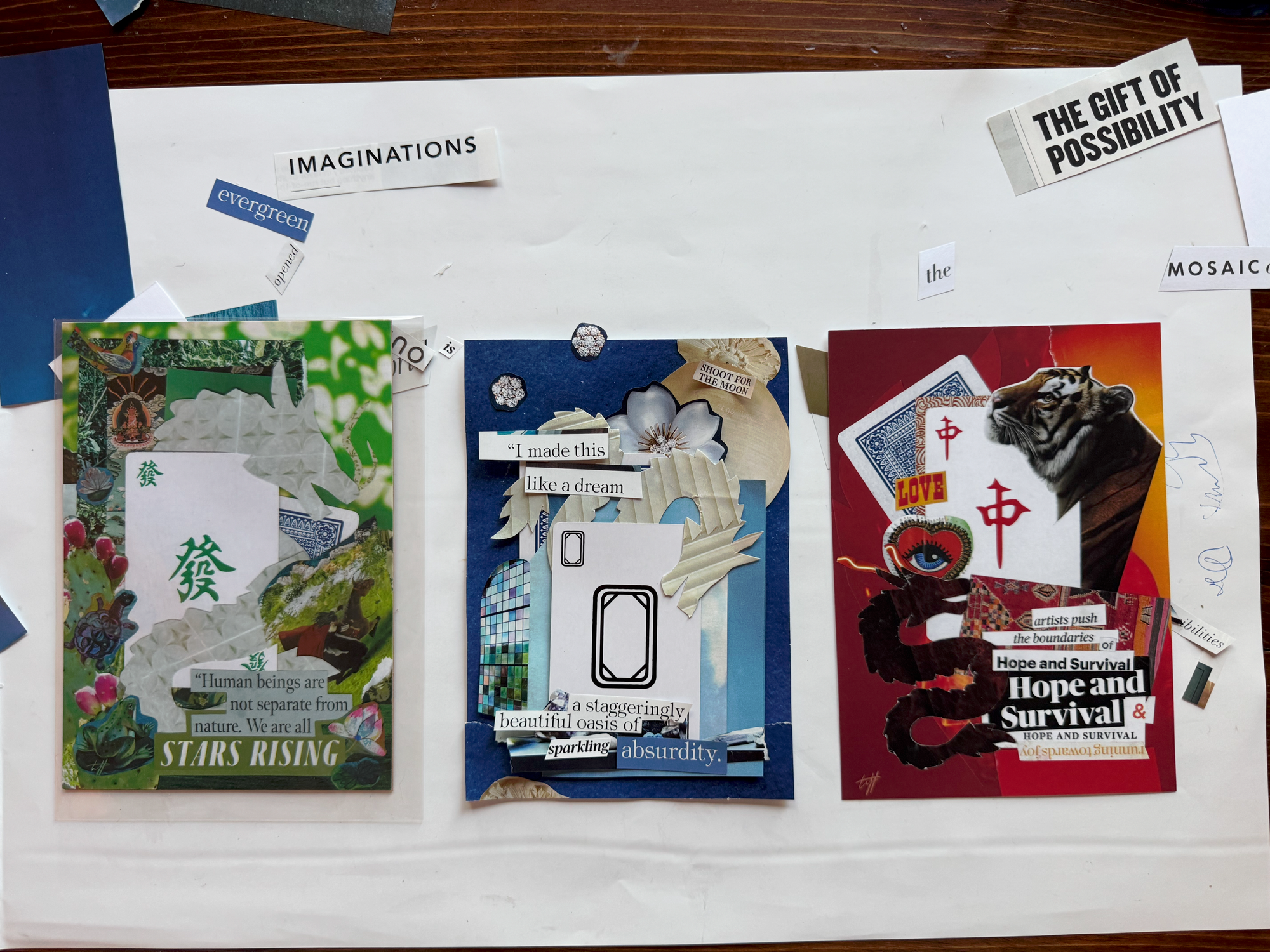
Mooncake Collective is a four-person artist collective she co-founded with Lizzie Nguyễn, Nhi Nguyễn, and Amy Tam. They met playing mahjong about a year ago. Themes: girlhood, creativity, celebrating each other.
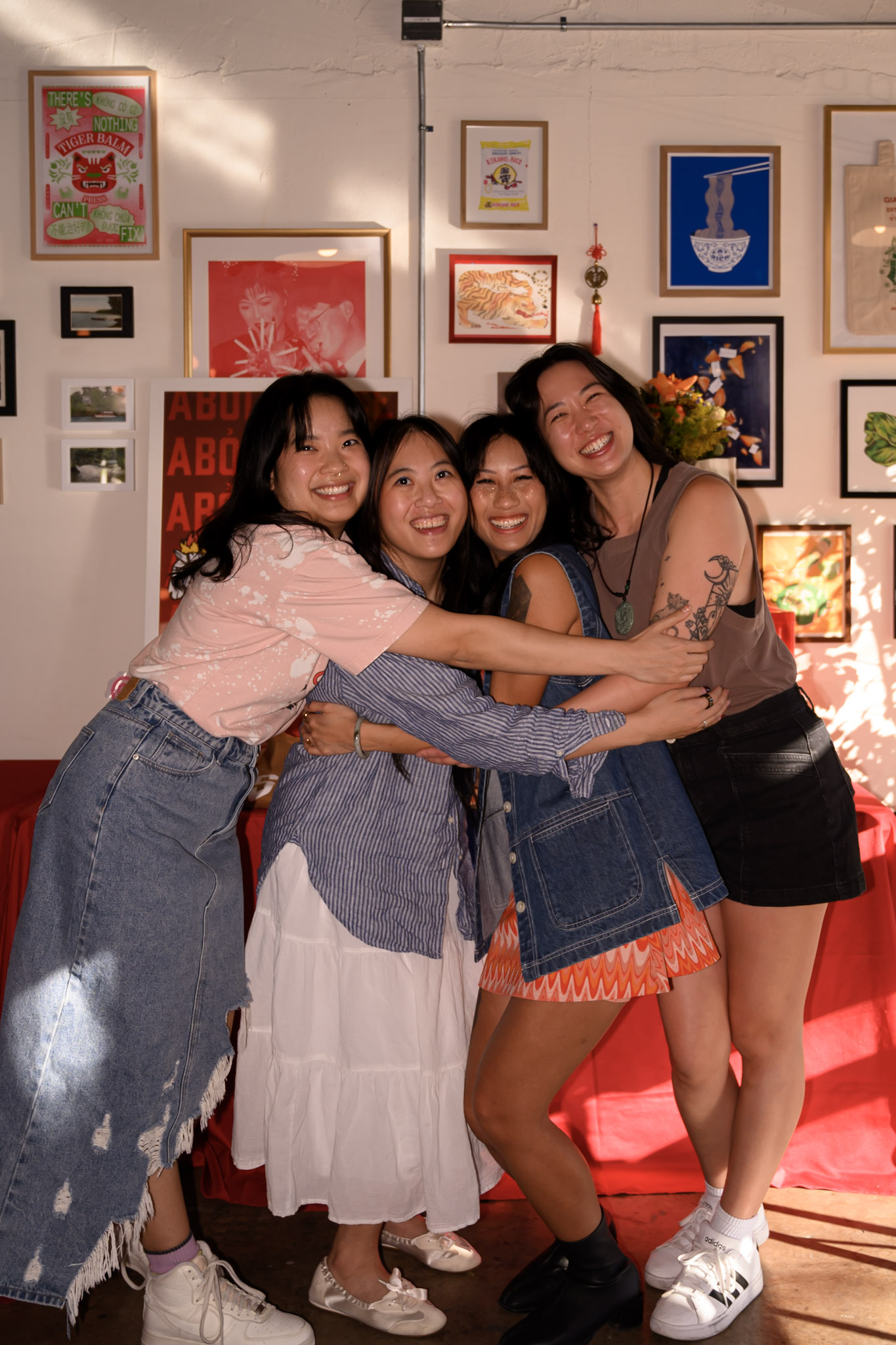
WitchyCrafts is about intentionality and intuition and providing opportunities for kids and adults of all ages to explore a practice of internal reflection and external expression through local market appearances, curated crafting circles, and bespoke private experiences.
moon+maker sits at the wellness end of her practice — yoga, sound bowls, embodied movement. How do we be intentional about the lives we live, and how is that expressed through the body?
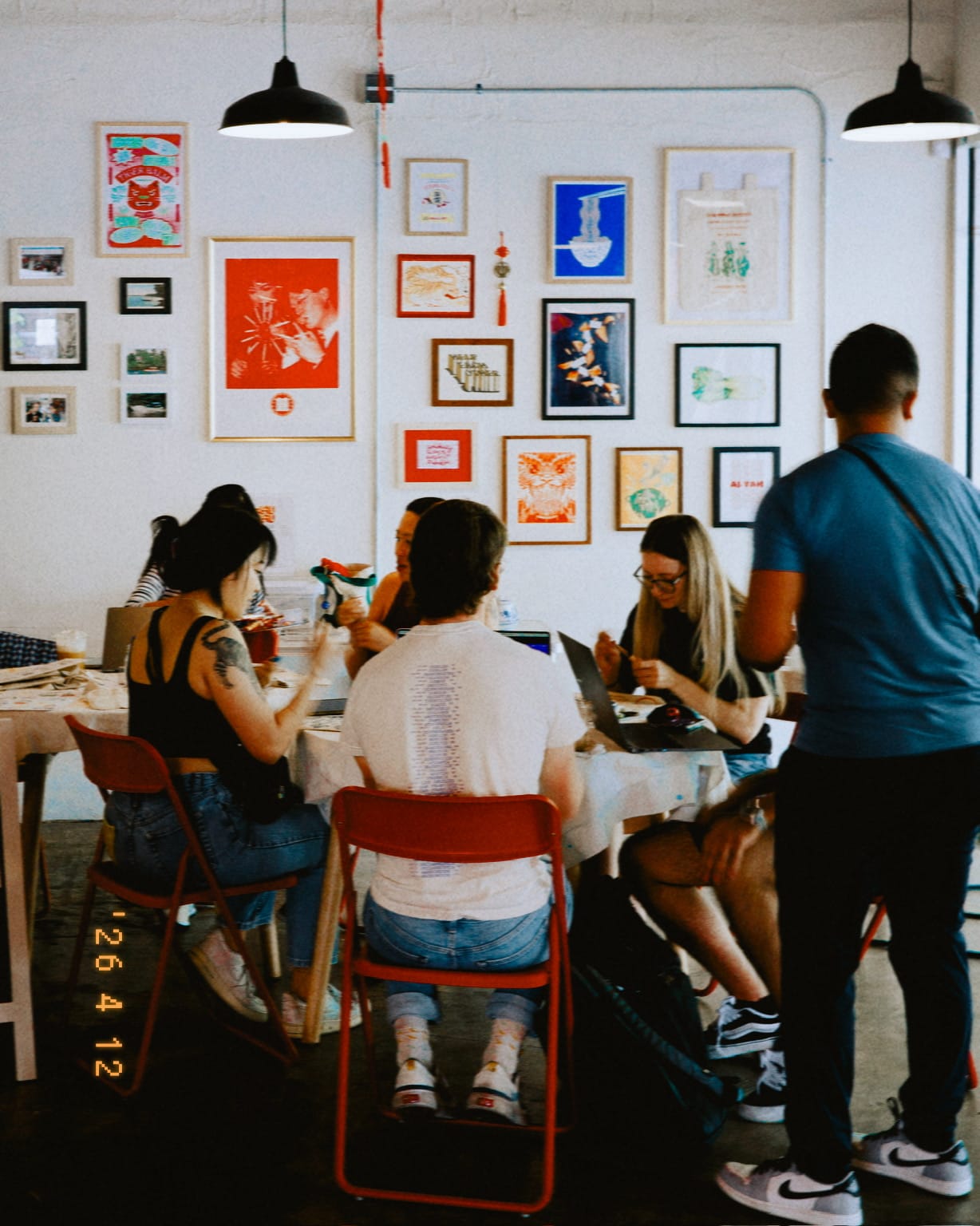
Tiffany’s childhood was supported by art teachers who nurtured her curiosity and sense of exploration. Today, she has stepped into that same role, teaching elementary art at The Compass School.
Different audiences. Different purposes. Same values, all the way through.
...
The most personal thing Tiffany is building is launching at the end of Heritage Month in May.
The MAHJ started as a natural extension of her exploration of the question: How do mahjong and immersive creative experiences impact community well-being?
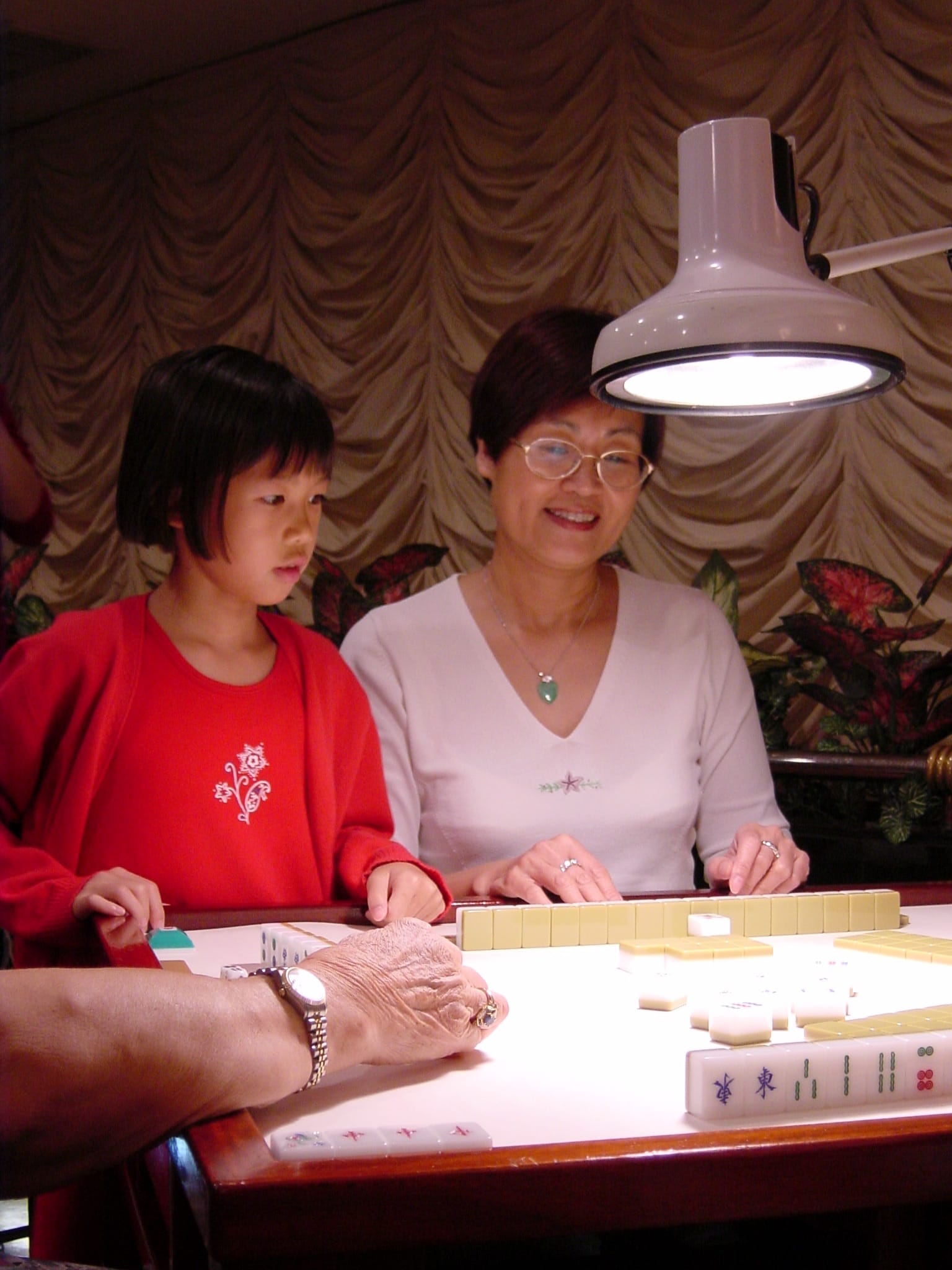
She grew up playing Hong Kong-style mahjong on her parents' lap. At banquets. At family gatherings. Four people around a table for hours, talking the whole time. Tactile. Screen-free. Something special was happening in those moments. And now, as an adult, she wants to study to more deeply understand how and why.
The MAHJ project is framed deliberately like a research endeavor. She's not the expert. She's asking the question and inviting the community in to explore possibilities with her through a series of live, in-person mahjong gatherings and community-based events.
The first prototype is planned for Saturday, May 23, 2026 from 6pm - 11pm at Distribution Hall — a mahjong parlor with a teaching hour and open play, immersive and interactive art installations, pop-up sari sari store and art gallery hosted by Andy Dun of Asian Season ATX, one-night only night market and outdoor food park on the lawn hosted by The Lucky Market Festival, and more. Experiential by design. Built to make something, not just host something. Free and open to the public.
She's actively looking for partners whose work resonates with what the project is exploring. The MAHJ may be one of the most ambitious thing she's attempting. It might also be the most important, an opportunity to create play on a large-scale and in collaboration with community.
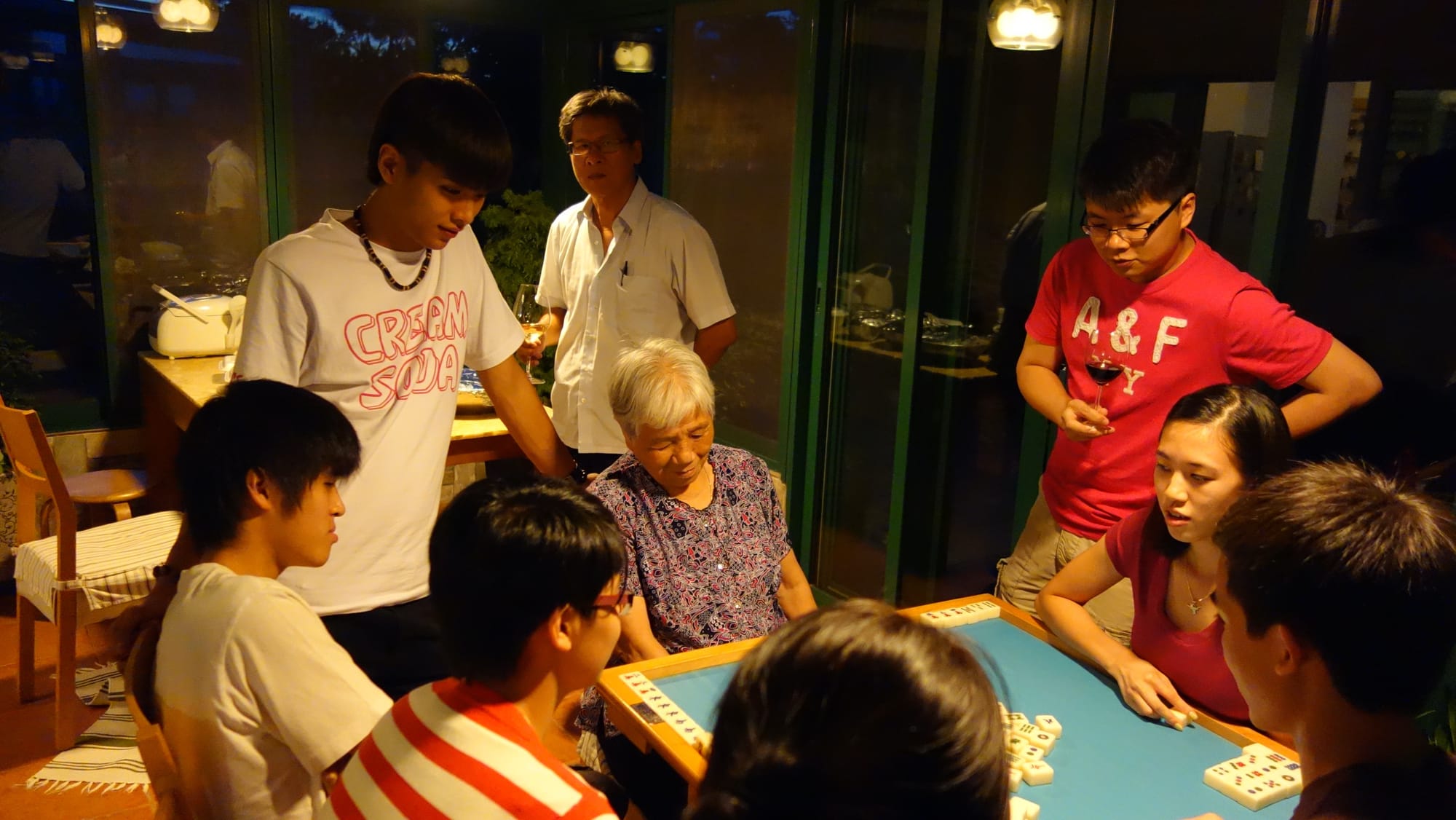
Mahjong runs in the family. Her brother, Ernest Chan, co-founded Green Tile Social Club in 2022 — a New York-based mahjong community and brand exploring the intersectionality of identity, culture, and tradition through community events. What started out as intimate, four-person mahjong nights is now part of the forefront of the modern mahjong renaissance, innovating on the ways we consider mahjong and Asian American culture in our social fabric.
...
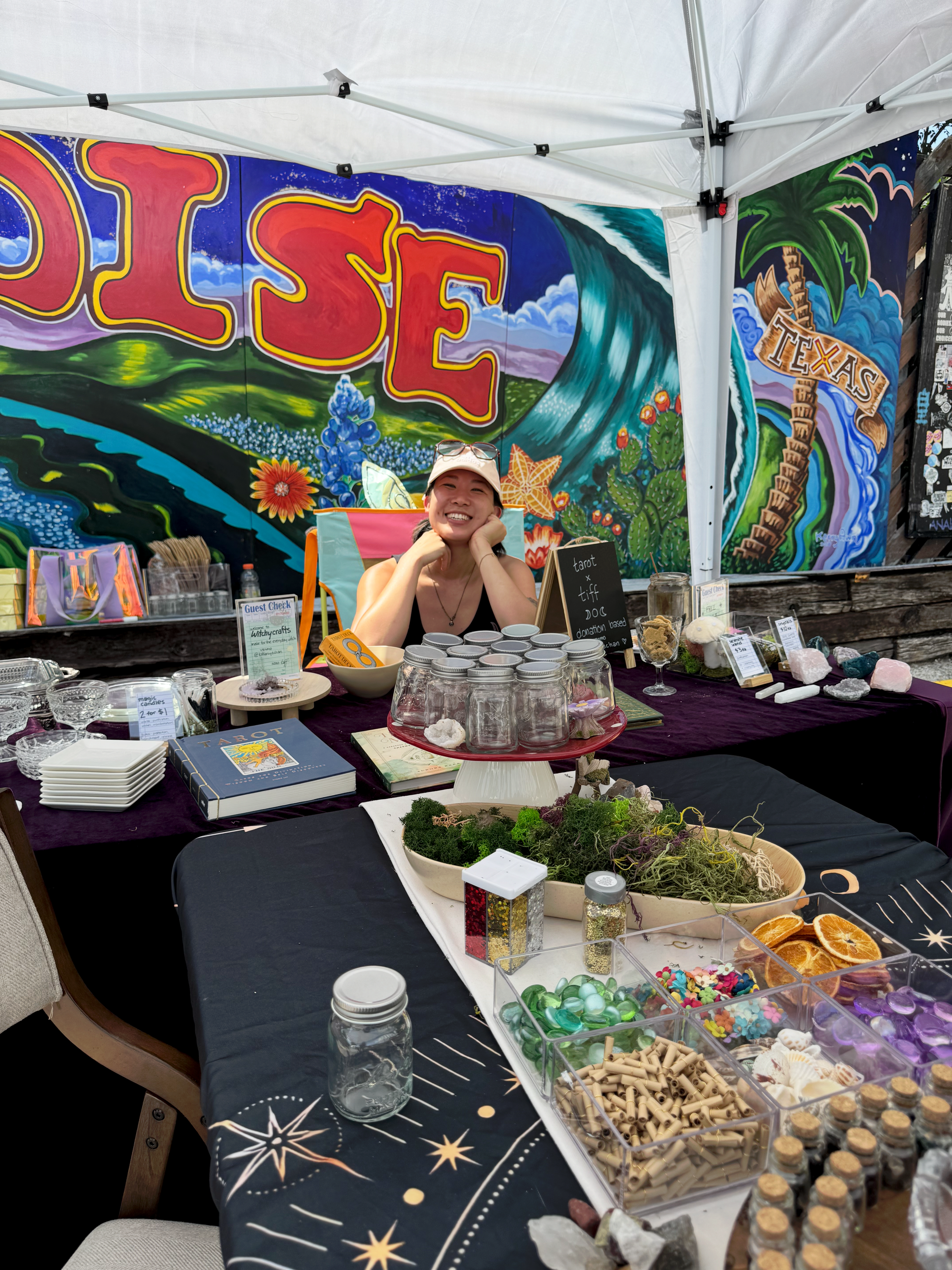
Every single thing Tiffany has built traces back to one image.
A table. Covered in supplies. Always out. Always ready. No explanation required.
She didn't earn that table. It was just there — a gift from parents who understood, maybe instinctively, that access to making things is access to something deeper. Confidence. Agency. The knowledge that you can bring something into the world that didn't exist before.
Most people never get that table. Not as a child, and not as an adult. The barrier is always something — cost, time, permission, the creeping sense that creativity belongs to someone else, someone more qualified, someone who went to art school or calls themselves an Artist.
Tiffany has spent her entire career dismantling that barrier. Spark Magazine was a table. The dragon at Lau Lau was a table. WitchyCrafts is a table. Mooncake Collective, Lau Lau Art Club, The Lucky Market Festival, the MAHJ — all of it, tables. Different shapes, different materials, different rooms. The same invitation.
Come make something.
That's what she's building. Not a brand. Not a portfolio of ventures. An art table big enough for a whole community to sit around — one where the only requirement is that you show up, and the only output that matters is what happens when people make things together.
She grew up with that table. Now she's building it for everyone else.
Welcome home.
Quick answers
Fast facts from this story
Who is featured in this story?
Tiffany Chan, a strategist, artist, and community builder, is the Austin creative profiled in the story.
What question drives Tiffany’s work?
Tiffany’s work is driven by the question, ‘What grows when we create together?’ The story uses that question to frame creativity as an ecosystem, not a solo act.
What does Tiffany believe about creativity?
Tiffany sees creativity as something everyone carries, not only the domain of professional artists or people who make a living from creative work.
What keeps people from making things?
The story says the barrier is usually not talent. People often need access to space, materials, time, and mental capacity before they can make things.